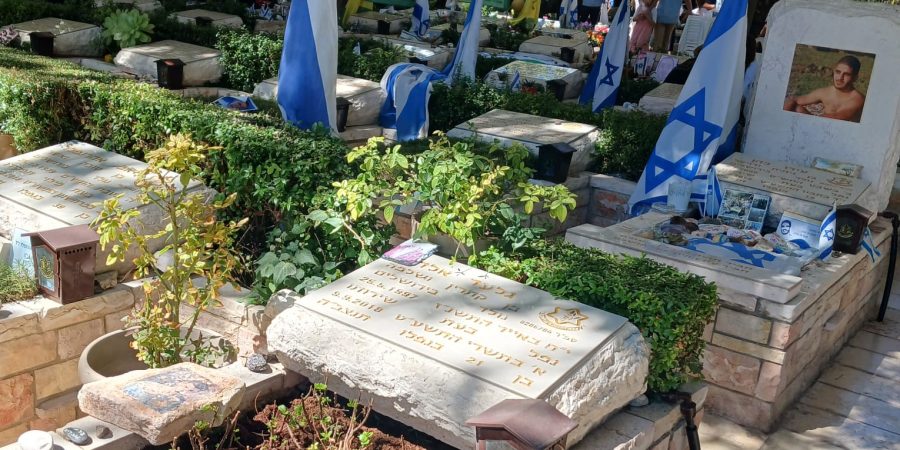
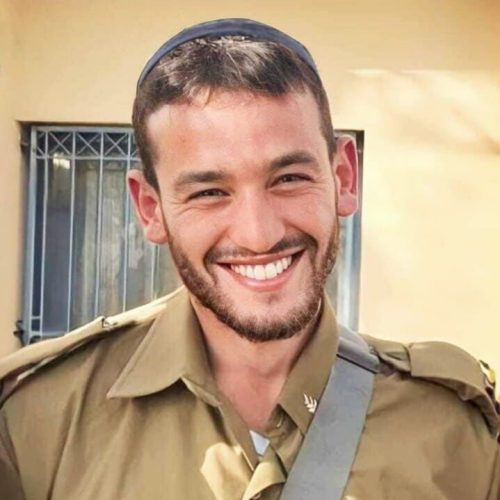
Yesterday, we were at Har Herzl for the two-year azkara (memorial) for Shiloh Rauchberger, who fell on the 7th while fighting off dozens of terrorists on his base and saving so many people that day.
The memorial brought me back to his funeral, to that terrible first week of the war. Then, as we arrived for the funeral, there were people directing the crowds (literally thousands and thousands of people) with lists of burial locations and corresponding names because there were so, so many burials that day and it was impossible to know where to go. While waiting for Shiloh’s funeral to start, we found ourselves standing and listening to the agony, the sheer piercing grief, as another family buried their soldier. As Shiloh’s funeral started and I looked around, I saw young people in wheelchairs, in casts, bandaged. It was like something out of a Hollywood war movie – but it was real and impossible to believe that these young, bandaged, scarred soldiers had just battled against terrorists for their lives and were now burying their friend and fellow fighter. I remember when the funeral ended, kissing one of our soldiers and giving him a blessing that he should come back safely; I held back my tears until he started to walk away. There were so many days, months, even years of uncertainty, horror and grief to come.
Two years later, the atmosphere was not dissimilar, with hundreds upon hundreds of us under the shade at Har Herzl to memorialize these soldiers who all fell in battle on the same day and were all being remembered simultaneously. We waited in a sea of people, listening to the tears, the memories, the agony of other families. The family that spoke before Shiloh’s told that tomorrow their next son would be receiving his deceased brother’s beret upon finishing his training in Egoz. And then their little sister, who couldn’t have been more than 6 or 7 (there were too many people to see her) spoke; in her tiny voice she spoke directly to her brother, Amichai, about all of the things she’s learned to do since he was killed. “Amichai, Amichai. I learned to ride a bike. And I can read and write now. I wish you could see me doing all of these things.”
There were not many dry eyes, even as most of the hundreds of people standing there hadn’t known Amichai, the Maglan fighter about whom they spoke.
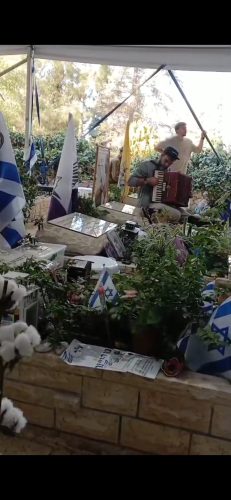
In between speeches, at one point, I was struck by the quiet sounds of music wafting from nearby. Turning to my side, I saw a father sitting quietly by his musical son’s grave, playing a love song on the accordion. There was no fanfare – no other visitors with him; just a father arriving as he probably did frequently, to play a tune of love and longing for his son.
Finally, it was time for Shiloh’s memorial; the family spoke with such beauty, such longing. There were words of hope, acknowledging the hostages who have finally returned; acknowledging the heroic actions Shiloh and so many others took on the 7th and those that have continued to fight every day since then.
There was so much longing. So many dreams taken far, far too soon.
Directly in front of me, I noticed a woman sitting quietly on a stool beside a grave. Originally, I thought she was waiting for Shiloh’s azkara with the rest of us, but I soon realized she was there for her husband. She kept touching his grave as she listened to the sea of speeches, perhaps gaining strength from the collective grief of those around her. She was so young, and I googled his name to find that he was in his early 30s with a wife and child when he fell. How often does she come to his grave? What is her life like now and how and when will she rebuild?
And then the beautiful words about Shiloh concluded and we quietly worked our way through the crowds to exit the cemetery, as more and more people poured in for the next round of memorials. First, we kissed our oldest son, again, as he returned to his reserve duties directly from the cemetery. And we hugged our second son, who was on the border fighting when Shiloh was buried; who has only come out of Gaza in the last few days for a brief reprieve before returning to the same role Shiloh had, as an officer in the IDF leading his charges.
Amidst the joy of the return of the hostages, we must continue to remember those who have given everything for us, for our country; the families who are left with empty arms and lost dreams; the families who won’t get those ecstatic moments of reunion, those heart-pounding moments of grace. We must continue to remember those physically, emotionally and spiritually wounded who have such long recoveries still ahead of them and who will carry these two years in the wounds on their bodies and their minds forever; we must continue to remember and fight for those whose bodies are still held by Hamas; and we must continue to support those still fighting for our safety and security.
May Shiloh’s memory, and the 915 other soldiers who have fallen for us, be a blessing.